Smart Project Delivery with BIM
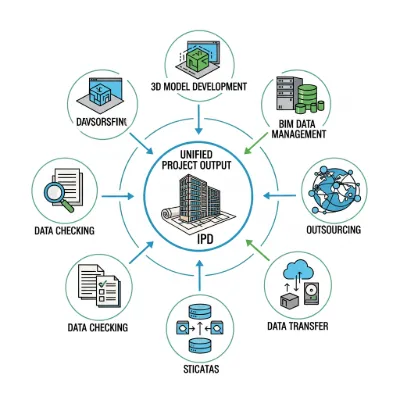
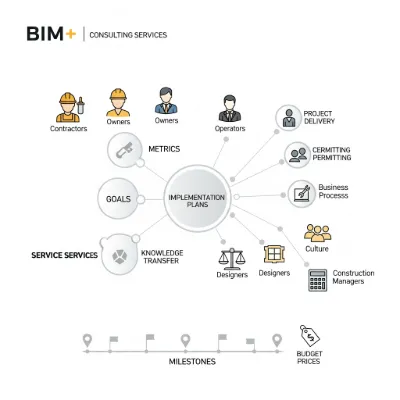
This is a modern approach to construction and infrastructure project management, combining Building Information Modelling (BIM) with smart digital practices to improve efficiency, collaboration, accuracy, and sustainability throughout the entire project lifecycle, from planning to operations. It’s not just about using BIM software; it’s about integrating data, technology, and processes within a single ecosystem to enable informed, real-time decision-making.
Building Lifecycle Optimization
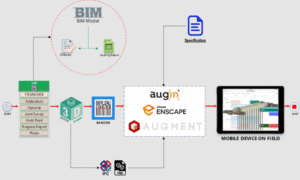
The integration of intelligent, modern systems based on BIM technology into construction project management is an essential aspect of the building process. An effective construction system involves modelling an intelligent system based on BIM technology, making use of participatory work, data interoperability, component-based modelling, parametric design, clash detection, 4D and 5D BIM integration, the Internet of Things (IoT), sensor integration, cloud-based connectivity, and regulatory consistency.
Digital Twin for Energy Systems
This is a dynamic digital representation of a physical energy system, such as a power plant, solar panel, distribution network, or renewable energy facility, that is connected in real time through sensors, the Internet of Things (IoT), and operational data. This technology enables much more accurate condition monitoring, performance prediction, and data-driven decision-making. With a digital twin, operators can run scenario simulations, perform predictive maintenance, optimize energy efficiency, and respond proactively to system disruptions. In the context of the energy transition and sustainability, digital twins play an important role in integrating renewable resources, intelligently managing loads, and improving system reliability while reducing the carbon footprint. This makes the digital twin a vital foundation for the complex and evolving digital transformation of the energy sector.
Digital compliance within the AEC and industrial sectors
This refers to the application of standards, regulations, and best practices throughout the project and operational lifecycle via integrated digital systems. This includes utilizing BIM (Building Information Modelling), electronic documents, a Common Data Environment (CDE), and automated auditing and reporting to ensure compliance with technical, safety, environmental, and governance requirements. In the AEC sector, digital compliance helps to ensure that designs comply with building and zoning regulations and supports quality verification during construction. In the industrial sector, this involves tracking occupational safety standards, certifying production processes, and integrating real-time, data-driven quality systems. Digital compliance enables companies to reduce the risk of regulatory failure and increase transparency, efficiency, and accountability in project and asset management.